
Pakistan’s threat landscape does not wait for you to be ready. For law enforcement units, NGO field teams, corporate security convoys, and private clients operating in high-risk regions, a standard pickup truck is a liability dressed up as a vehicle. That is where the bulletproof Hilux steps in, and it does so better than almost any other platform available in the country.
This guide covers everything a buyer needs to know before commissioning an armoured Toyota Hilux: what protection levels actually mean, what a complete build must include, who needs what, and what separates a genuinely certified build from one that only looks the part.
>> Related Post:Armoured Upgrades for Toyota Hilux in Pakistan: What You Need to Know
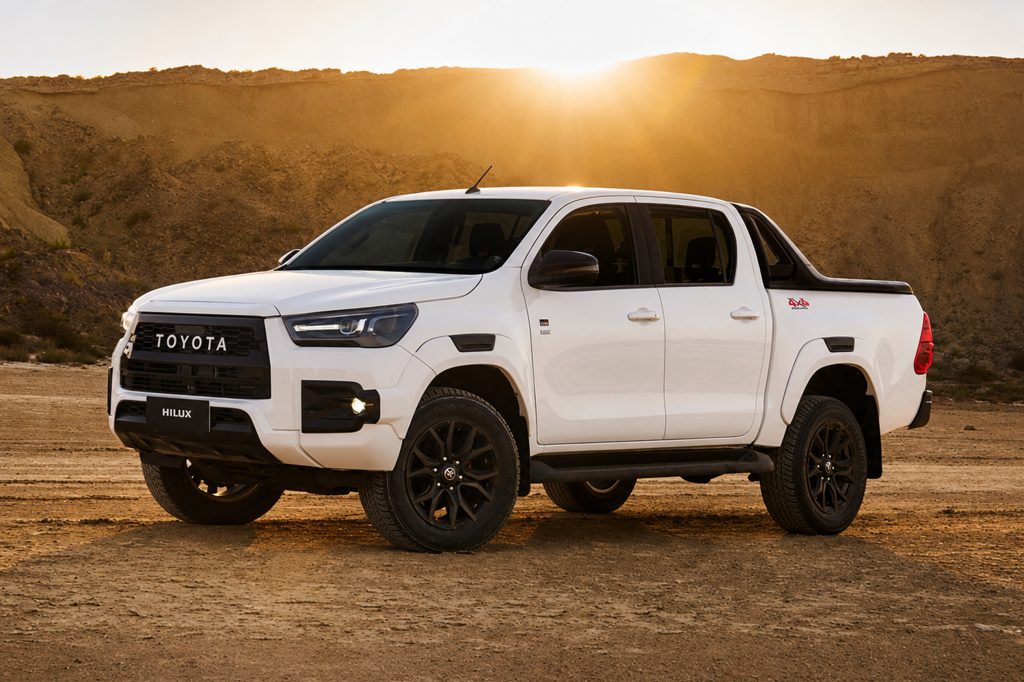
Why the Bulletproof Hilux Dominates Armoured Pickups in Pakistan
The Hilux Is Not Just Popular, It Is Structurally Right for Armouring
Not every vehicle makes a good base for serious ballistic protection. The Toyota Hilux earns its position among the most trusted armoured pickups in Pakistan for one foundational reason: its ladder-frame chassis. Unlike monocoque SUVs that rely on the body shell for structural rigidity, the Hilux sits on a separate steel frame that is specifically engineered to absorb load, distribute stress, and handle the additional weight that comes with a certified armour package, without compromising the vehicle’s structural integrity or drivetrain.
When you add B6-rated ballistic steel across an entire passenger cell, that weight is significant. It demands a platform built to carry it. The Hilux is exactly that. Its suspension geometry, frame strength, and proven drivetrain make it one of the most reliably armourable platforms in any threat environment, from Islamabad’s urban corridors to the rougher inter-city routes of KP and Balochistan.
The demand for armoured vehicles globally continues to reflect this kind of operational reasoning. According to Precedence Research, the global armored vehicle market is estimated at USD 21.58 billion in 2025 and is predicted to reach USD 36.15 billion by 2034, growing at a CAGR of 5.91%. The Asia-Pacific segment of that market, which includes Pakistan’s operating environment, is expanding at nearly the same rate, driven directly by security pressures that mirror what clients across Pakistan face daily.
Why Armoured Pickups in Pakistan Demand a Different Kind of Vehicle
For clients who think an armoured SUV covers every situation, consider the operational profile of a field security team moving between Quetta and a remote project site, or an NGO convoy operating through Khyber. These missions require ground clearance that sedans cannot offer, cargo capacity that SUVs often sacrifice, and the ability to handle terrain that would stop a standard executive vehicle in its tracks. The armoured Hilux solves all three of these simultaneously.
>> Is your current transport fleet actually built for Pakistan’s real threat environment? Contact AAT ArmourTech today for a protection assessment.
B6 vs B7 Armoured Hilux: Understanding Protection Levels Before You Buy
What B6 Protection Means for the Armoured Toyota Hilux
B6 is the standard that most serious buyers in Pakistan’s corporate, NGO, and law enforcement sectors should start with. A certified B6 Revo Islamabad build means the vehicle’s passenger cell, including doors, roof, floor, firewall, and all glass panels, can withstand 7.62x51mm NATO rifle rounds and AK-47 fire across multiple hits without structural failure. This is not selective protection for the driver’s door. It is full-cell coverage, which is the only kind of coverage that counts under real-world threat conditions.
For the majority of organisations operating in Pakistan, including private security companies, corporate fleet managers, and NGOs working in volatile districts, B6 is the minimum acceptable standard. Any supplier who cannot confirm certified B6 compliance with documented ballistic test reports is not a supplier worth working with.
What a B7 Armoured Hilux Adds and Who Actually Needs It
The B7 armoured Hilux goes further. B7 certification means the vehicle can resist armour-piercing rifle rounds, specifically the 7.62x39mm AP and 5.56x45mm SS109 variants, which are threats associated with more sophisticated armed actors rather than opportunistic criminal groups. This level of protection is appropriate for government security details, certain law enforcement applications, and clients operating in the country’s most volatile security environments where the assessed threat profile includes AP ammunition.
B7 builds are heavier, more complex, and more costly. The suspension and brake recalibration requirements are more demanding, and the build process takes longer. For most corporate and NGO clients, B6 is sufficient. For government-adjacent clients with formally assessed high-threat profiles, B7 is the right call.
Underbody Blast Protection: When to Add It
Underbody blast protection is a separate consideration from ballistic ratings. For clients whose routes cross areas where roadside improvised explosive devices are a documented risk, a STANAG 4569-compliant underbody package transforms the bullet proof Revo from a ballistic protection platform into a full-spectrum threat mitigation vehicle. It must be requested and specified separately. It is not a standard inclusion in every build, and that is intentional, because adding it unnecessarily increases weight without operational benefit for most clients.
>> Related Post: Run Flat System in Armoured Vehicles: Why It’s Non-Negotiable
What a Complete Bulletproof Hilux Build Must Include, and What Buyers Miss
The Five Components That Define a Real Armoured Toyota Hilux Build
Ballistic Steel Across the Full Passenger Cell
CEN 1522 FB6+ certified ballistic steel should cover the doors, roof, floor pan, pillars, and firewall. Partial coverage, which some lower-end suppliers offer to reduce cost, creates blind spots in the protection that a determined attacker will find. A certified build is a complete build, no exceptions. You can explore the full range of ballistic-related products and materials that go into a properly engineered armour package.
EN 1063 B6/B6+ Ballistic Glass on Every Vision Area
Every window, not just the windscreen. The ballistic glass on a properly built armoured Hilux must carry multi-hit resistance across all vision panels without crazing or shattering in a way that obstructs the driver’s sightlines. A vehicle with certified steel but uncertified or undersized glass is not a protected vehicle.
Reinforced Suspension Calibrated to Armour Weight
Armour adds substantial mass. Without a suspension system specifically re-engineered for that additional load, handling degrades, tyre wear accelerates unevenly, and the vehicle becomes genuinely unsafe to operate at speed. The suspension recalibration is not optional, it is part of the engineering requirement for a vehicle that weighs significantly more than its factory specification.
Upgraded Brake System
Longer stopping distances are a direct consequence of added weight if the braking system is left at factory standard. An upgraded brake package calibrated to the armoured Hilux’s actual mass is what keeps stopping distances within a safe operational range. This is an area where buyers frequently overlook the detail and suppliers sometimes quietly skip the upgrade.
Run-Flat Tyre System
In a threat scenario, a compromised tyre means compromised mobility, and compromised mobility is when threats escalate. A run-flat system allows the armoured Toyota Hilux to continue moving at operational speed after tyre damage. For any armoured pickup in Pakistan operating on inter-city routes or through unstable terrain, this is non-negotiable.
Surveillance and Communications Systems
A 360-degree camera system with DVR recording and infrared night vision, GPS tracking with real-time monitoring, and crew intercom capability are the systems that allow a security team to manage a threat before it materialises rather than react after it does. These are not luxury additions. In Pakistan’s operating environment, situational awareness is as much a part of protection as ballistic steel.
According to Grand View Research,the Asia-Pacific region dominated the broader armored vehicle market with a 33.2% revenue share in 2024, with demand driven specifically by rising security pressures, counter-terrorism operations, and increased requirements for VIP and law enforcement vehicle protection. That regional demand pattern directly reflects the environment that armoured pickups in Pakistan are built to operate within.
>> Related Post: How to Choose Armoured Pickup Trucks for Security Teams 2026
Who Needs a Bulletproof Hilux in Pakistan and Which Build Is Right for Them
Law Enforcement and Paramilitary Units
For patrol and rapid response operations in KP, Balochistan, and border regions, the armoured Hilux is the platform of choice. Its ground clearance handles the terrain, its ladder frame takes the armour weight, and its operational availability in Pakistan means parts and trained technicians are accessible across the country. B6 is the baseline for most units. B7 with underbody blast protection is appropriate for units operating in areas with confirmed IED threat documentation. AAT ArmourTech’s range of law enforcement vehicles is built around exactly this kind of operational requirement.
NGOs and Aid Organisations
Field teams operating in remote or volatile areas need a vehicle that can handle unpaved terrain, carry crew and equipment, and provide certified protection against the threat of armed robbery or targeted attacks. The armoured Hilux Revo in single or double cab configuration provides that combination. For most NGO field applications, a B6 build with run-flat capability and GPS tracking covers the requirement without the additional cost and weight of a B7 package.
Corporate Security and Private Clients
Executives and security principals moving between high-risk sites, whether in Karachi’s port zones, Lahore’s industrial corridors, or between cities, who need protection that does not compromise the vehicle’s daily operational capability, fit the armoured Hilux profile well. The double cab variant offers crew flexibility. The platform’s unremarkable exterior, relative to a large SUV convoy, provides a degree of operational discretion that has real tactical value.
According to Fortune Business Insights, the global pickup truck market is expected to grow from USD 242.20 billion in 2026 to USD 367.05 billion by 2034, at a CAGR of 5.33%, with demand driven increasingly by dual-use commercial and security applications in emerging markets. The armoured segment of that market is growing faster than the general pickup category, reflecting the reality that buyers in high-risk regions are no longer treating protection as optional.
>> Need a bulletproof Hilux configured for your specific threat environment and route profile? Request a tailored recommendation from AAT ArmourTech.
Why AAT ArmourTech Builds the Bulletproof Hilux Pakistan’s Operations Rely On
Every armoured Toyota Hilux that leaves AAT ArmourTech’s Islamabad facility is built entirely in-house. One team, one roof, no subcontractors. That matters because when a vehicle is built across multiple contractors, accountability becomes fractured. If the glass supplier and the steel fabricator work separately from the suspension engineer, there is no single point of oversight ensuring the final build performs as a system rather than as a collection of parts.
AAT ArmourTech’s armoured Toyota Hilux Revo is certified to EN 1063 B6/B6+ ballistic glass and CEN 1522 FB6+ ballistic steel standards, with optional STANAG 4569 underbody blast protection for clients operating in the highest-threat corridors. Every build includes full documentation: material test logs, third-party certification reports, and component traceability records. A protection claim without paperwork is not a verified claim.
The build includes 360-degree surveillance with DVR and infrared night vision, GPS tracking, crew intercom, run-flat tyre systems, recalibrated suspension, and upgraded braking. Customisation options extend to interior layout, communications systems, panic alarms, and additional tactical fitments based on the specific mission profile. Their after-sale service centre in Islamabad provides lifetime maintenance support, fast repair turnaround, and full component stocking. In Pakistan’s operating environment, that after-delivery support is not an afterthought. It is part of what keeps the vehicle mission-capable.
>> Your protection decision should be backed by verified engineering.Talk to AAT ArmourTech and get your bulletproof Hilux built right.
FAQs: Bulletproof Hilux in Pakistan
1. What makes the Toyota Hilux a good base for a bulletproof build in Pakistan?
The Hilux’s ladder-frame chassis is the key reason. Unlike monocoque vehicles, the Hilux has a separate steel frame that is purpose-built to carry substantial loads. This structural foundation handles the additional weight of ballistic steel, upgraded glass, and reinforced mechanical components without compromising the vehicle’s geometry or drivetrain. It also has a strong service and parts network across Pakistan, which matters for ongoing operational reliability.
2. What does B6 protection actually cover on an armoured Hilux?
A certified B6 build provides ballistic resistance across the entire passenger cell, including all doors, the roof, floor pan, firewall, and every glass panel. It must withstand 7.62x51mm NATO and AK-47 rifle fire across multiple hits. The key word is “certified,” which means the materials have been independently tested and the build comes with documented proof of compliance. B6 is the minimum credible standard for any serious armoured Hilux in Pakistan.
3. When does a buyer need a B7 armoured Hilux instead of B6?
B7 protection is appropriate when the formally assessed threat profile includes armour-piercing rifle rounds. This typically applies to government security details, certain law enforcement units operating in the most volatile districts, and military-adjacent clients. For most corporate, NGO, and private sector buyers, B6 covers the realistic threat environment in Pakistan’s urban and inter-city operating areas. Upgrading to B7 adds weight, build complexity, and cost, so it should only be specified when the threat assessment genuinely requires it.
4. What is a bullet proof Revo and how is it different from a standard Hilux Revo?
A bullet proof Revo is a Toyota Hilux Revo that has been converted through a certified armouring process. The standard Revo from the factory has no ballistic protection whatsoever. The armoured version replaces standard glass with EN 1063-certified ballistic glass, adds CEN 1522-rated ballistic steel to the passenger cell, upgrades the suspension and brakes to compensate for the added weight, and integrates a run-flat tyre system. The exterior can remain largely unchanged, which is part of what makes the platform operationally effective for clients who do not want to signal that a protected vehicle is on the road.
5. Do armoured pickups in Pakistan need underbody blast protection as standard?
No. Underbody blast protection rated to STANAG 4569 is an additional specification that applies specifically to clients whose routes cross areas where IED threats have been formally assessed. For most corporate, NGO, and urban law enforcement applications in Pakistan, standard B6 ballistic protection is appropriate. Underbody protection adds weight and cost that is only warranted when the operational threat profile includes explosive devices.
6. How long does it take to build a bulletproof Hilux in Pakistan?
A standard B6 build typically takes four to eight weeks depending on the specification and supplier capacity. Builds that include additional fitments such as underbody blast protection, bespoke surveillance configurations, or custom interior layouts will take longer. Buyers operating with a hard deployment date should engage the supplier early and confirm the build timeline before committing.
7. Does armouring affect the Hilux’s driving performance?
A poorly done armour build will compromise handling, increase stopping distances, and put excessive stress on the drivetrain. A properly engineered build includes suspension recalibration specific to the armoured vehicle’s actual loaded weight, upgraded braking matched to the increased mass, and run-flat tyres integrated to the correct load rating. When these systems are correctly engineered, the armoured Toyota Hilux handles close to its factory specification under normal driving conditions.
8. What surveillance systems should a bulletproof Hilux include for operations in Pakistan?
For Pakistan’s threat environment, a 360-degree camera system with DVR recording and infrared night vision capability is the baseline. GPS tracking with real-time route monitoring allows security teams to maintain situational awareness and coordinate response. Crew intercom and external PA capability support communication during incidents. For clients operating in areas with documented high-risk routes, these systems allow a threat to be identified and a response coordinated before a direct confrontation occurs.
9. Is a B6 Revo Islamabad build appropriate for field operations outside the capital?
Yes. B6 certification is not a location-specific standard. A certified B6 Revo Islamabad build provides the same ballistic protection across any operating environment in Pakistan, whether that is urban Islamabad, Karachi’s port zones, or inter-city routes in KP and Balochistan. What changes between environments is the additional specification: clients operating on remote routes should ensure their build includes run-flat tyres and GPS tracking. Those operating in areas with IED history should add underbody blast protection.
10. Why does it matter that the bulletproof Hilux is built in-house by one supplier?
Because fragmented builds produce fragmented accountability. When ballistic steel, glass, suspension recalibration, and surveillance systems are handled by different contractors, there is no single party responsible for ensuring the complete vehicle performs as a system under real threat conditions. An in-house build, where one team designs, fabricates, integrates, and quality-checks every component under one roof, gives the buyer a clear line of accountability and a much higher likelihood that the finished vehicle performs the way it is supposed to when it counts.