
Not every threat looks the same. A rapid response unit clearing an urban street in Karachi operates in a completely different environment than a border patrol team working the Balochistan highlands or a counter-terrorism unit handling a high-value target in Peshawar. One vehicle spec cannot cover all of that, and this is exactly why armoured vehicle customization in Pakistan has become a critical part of how law enforcement agencies build and deploy their fleets.
In 2026, a standard-issue vehicle is no longer acceptable for high-risk federal operations. The question is not whether to customize. It is what to customize, how much, and who builds it right.
>> Related Post: Law Enforcement Vehicles: Built for High-Risk Operations
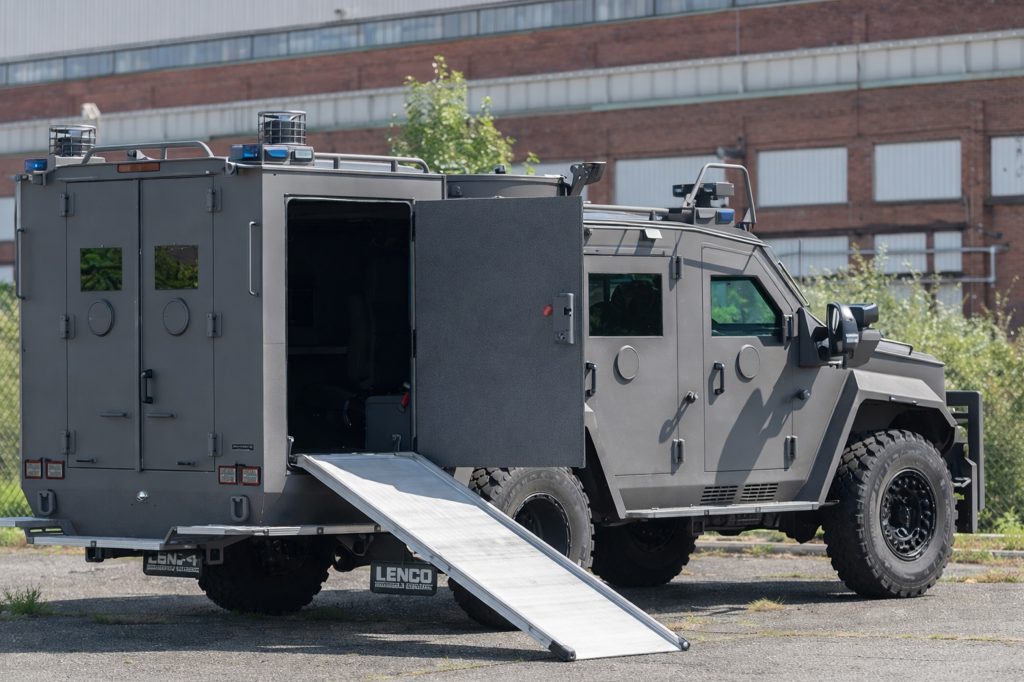
Why Armoured Vehicle Customization in Pakistan Is Now a Baseline Requirement for Law Enforcement
The Threat Environment Has Changed Permanently
Pakistan’s federal law enforcement agencies face a layered threat picture that keeps shifting. Urban operations involve crowd control, high-speed pursuits, and sudden armed encounters. Rural and border operations bring rough terrain, IED risks, and extended deployments without resupply. A vehicle designed to handle one of these environments will likely fall short in another.
The global armoured vehicle market is projected to grow from USD 42.0 billion in 2025 to USD 49.9 billion by 2030, at a CAGR of 3.5%, driven by rising defense spending, geopolitical tensions, and the need for enhanced border security. That number reflects what agencies worldwide already know: off-the-shelf protection is not enough. For Pakistan’s federal operations especially, the pressure to build smarter, mission-specific fleets is stronger than it has ever been.
Why Generic Builds Fail in the Field
A vehicle heavy enough for blast protection will struggle on the narrow streets of a city. A vehicle built for city patrol will be underpowered and underprotected on a remote highway. The modular design of wheeled armoured vehicles allows customization to suit different mission requirements, making them versatile for a range of applications including law enforcement, internal security, and emerging market needs. Agencies that get procurement right build around actual mission profiles, not around what happens to be available in stock.
>> Is your agency’s fleet built for your actual operating environment? Request a mission-specific assessment from AAT ArmourTech before your next procurement cycle.
What Armoured Vehicle Customization in Pakistan Covers for Law Enforcement Vehicles
1. Protection Level and Ballistic Configuration
The starting point for any serious build is the threat assessment. What rounds is this vehicle expected to stop? In what environment will it operate? These answers determine everything else.
For most federal law enforcement operations in Pakistan, B6 is the minimum acceptable standard. It handles high-powered rifle fire, which covers the majority of armed threat scenarios in urban and inter-city environments. B7 extends this to armour-piercing rounds and is better suited for counter-terrorism units or high-value interdiction roles. Beyond the rating itself, certified ballistic protection can be configured to include full spall lining, which stops secondary fragmentation inside the cabin after an impact, and blast-resistant floor liners for deployments in IED-prone zones.
A patrol vehicle working Islamabad’s urban core has different needs from a rapid intervention unit deploying into tribal areas. The build should reflect that difference exactly.
2. Suspension, Braking, and Mobility Systems
Armour adds significant weight. Without proper mechanical upgrades to compensate, a heavily armoured vehicle becomes sluggish, difficult to brake safely, and unreliable on rough terrain. This is one of the most commonly overlooked aspects of armoured vehicle customization in Pakistan, and it is where shortcuts create real danger.
Reinforced suspension systems are engineered to carry the added mass of armour without compromising handling or long-term structural integrity. Upgraded braking components are just as critical because factory brakes are calibrated for the original vehicle weight, not for a platform carrying hundreds of kilograms of additional steel and glass. Run-flat tire systems complete the mobility picture, allowing the vehicle to keep moving at operational speed even after tire damage, which can be the difference between a successful extraction and a compromised position.
3. Surveillance, Communications, and Tactical Electronics
A vehicle that survives a firefight but cannot coordinate with command is only doing half its job. The law enforcement vehicle of 2026 is increasingly a high-tech command center on wheels, where AI-powered surveillance systems, modular tactical consoles, and encrypted communications are becoming standard rather than optional. For Pakistan’s federal operations, this shift is just as relevant.
Tactical electronics for armoured law enforcement vehicles in Pakistan typically include 360 degree CCTV with DVR and night vision, encrypted radio systems, real-time GPS fleet tracking, PA systems for crowd control, and vehicle-mounted lighting for night operations. For counter-terrorism, hostage response, and high-risk warrant execution, having these systems built into the vehicle architecture is a core capability requirement, not an optional extra.
4. Mission-Specific Structural Modifications
Beyond ballistics and electronics, federal law enforcement vehicles often need structural changes tied directly to their operational role. Heavy-duty ramming bumpers are designed to clear barriers and disable suspect vehicles without damaging the armoured chassis. Prisoner transport builds include internal restraint systems and separated crew compartments. Roof hatches and turret mounts support elevated firing or observation positions. Each of these is a purpose-driven modification engineered for a specific scenario, not a cosmetic upgrade.
>> Related Post: Pros and Cons of Using Law Enforcement Trucks for Border and Highway Operations
How AAT ArmourTech Delivers Certified Armoured Vehicle Customization for Law Enforcement in Pakistan
AAT ArmourTech builds every vehicle entirely in-house at their Islamabad facility. No subcontractors, no split accountability, no points in the build where responsibility becomes unclear. One team handles everything from steel fabrication and glass installation to suspension calibration and electronics integration, which means if something is not right, there is no one else to blame and no reason it should not be fixed.
Every build comes with a full documentation pack including test logs, material certification reports, and component-level verification records. For procurement officers and security directors, that paper trail is what turns a purchase decision into a defensible one. Builds are certified to CEN 1063 B6 and B7, with optional STANAG 4569 underbody protection for high IED threat environments.
As procurement priorities shift toward purpose-built platforms, more agencies are choosing suppliers who can handle both new builds and upgrades under one roof rather than splitting the process across multiple vendors. AAT ArmourTech does exactly that, managing new builds and fleet upgrade programmes under the same certified, in-house process and giving agencies a single accountable partner regardless of what the project requires. The platform range covers armoured Land Cruisers and Prados for convoy and rapid response, Hilux-based field vehicles for patrol and interdiction, and van-based builds for prisoner transport and mobile command, each configured from the ground up based on the agency’s actual mission profile and deployment environment.
>> Your agency deserves a fleet built for your mission, not a generic approximation of it. Contact AAT ArmourTech and get a customization consultation tailored to your operational requirements.
FAQs: Armoured Vehicle Customization in Pakistan for Law Enforcement Vehicles in 2026
1. What does armoured vehicle customization in Pakistan typically include?
It covers protection level selection, mobility upgrades like reinforced suspension and run-flat tires, tactical electronics such as CCTV and encrypted communications, and structural add-ons like ramming bumpers and prisoner restraint systems. The right combination depends on the specific mission the vehicle is built for.
2. Is B6 or B7 protection the right choice for federal law enforcement in Pakistan?
B6 stops high-powered rifle fire and is the baseline for most law enforcement operations in the country. B7 handles armour-piercing rounds and is better suited for counter-terrorism units operating in the highest-threat environments. A proper threat assessment should drive this decision before any procurement begins.
3. Why do run-flat tires matter for law enforcement vehicles?
A punctured tire in a live threat scenario cannot be allowed to stop the vehicle. Run-flat systems allow the vehicle to continue at operational speed even after tire damage, which is non-negotiable for inter-city routes and border deployments in Pakistan.
4. Can existing police vehicles be retrofitted with armour?
Yes, and it is a practical option for agencies that cannot replace their entire fleet at once. However, the materials used, the structural integration, and the documentation behind every component must meet the same certified standard as a new build. A poorly retrofitted vehicle creates a false sense of security.
5. What surveillance options can be built into a law enforcement vehicle?
Standard options include 360 degree CCTV with night vision and DVR recording, encrypted radio systems, GPS fleet tracking, PA systems for crowd control, and vehicle-mounted lighting for night operations. These are increasingly specified as standard configurations for federal level operations rather than optional extras.
6. How does added armour affect vehicle performance?
It adds substantial weight, which impacts acceleration, braking, and handling if not properly compensated for. A well-engineered build includes upgraded brakes, reinforced suspension, and where necessary drivetrain modifications to keep the vehicle fully operational under pressure.
7. What is underbody blast protection and when is it needed?
It is a separate protection layer rated under STANAG 4569 that shields occupants from IEDs and landmines detonating beneath the vehicle. It is not required for every deployment but is essential for agencies operating in areas with a documented IED threat, particularly along Pakistan’s border regions.
8. Which platforms are most used for law enforcement vehicle customization in Pakistan?
The Toyota Land Cruiser and Prado are preferred for convoy and rapid response roles. The Hilux is the go-to for patrol and border deployments given its frame strength and durability. Van-based platforms like the Hiace are commonly used for prisoner transport and mobile command configurations.
9. How long does a customized law enforcement vehicle build take?
A standard build typically takes four to eight weeks depending on protection level and modifications required. Builds with underbody blast protection or advanced electronics will take longer, so agencies should plan their procurement timelines well in advance.
10. Why does it matter that the entire build happens in-house?
Because it means one team is accountable for every stage, from steel fabrication to electronics integration. Splitting the build across contractors creates quality gaps that are hard to detect and impossible to certify after the fact, which is not acceptable for a vehicle expected to protect lives.