
Armoured vehicles are built to operate in high-risk environments where safety, mobility, and reliability are essential. While ballistic protection and reinforced structures are crucial, mobility after an attack or tire damage is equally important. This is where a run flat system becomes a critical component of armoured vehicle engineering.
In situations involving gunfire, sharp debris, or sudden tire punctures, a standard tire can lose air pressure immediately and immobilize the vehicle. For security teams, VIP transport, or law enforcement operations, being stranded even for a few minutes can create serious risks. A run flat system allows the vehicle to keep moving even after a tire has been damaged, helping passengers reach a safe location without immediate tire replacement.
In countries like Pakistan where terrain and road conditions vary widely, run flat technology is not just useful, it is essential for ensuring continuous mobility.
>> Need expert guidance regarding the run flat system in armoured vehicles? Contact our team today.
What Is a Run Flat System?
A run flat system is a specialized technology that allows a vehicle to continue driving even after the tire has lost air pressure. Instead of collapsing when punctured, the tire is supported internally by a reinforced insert or structural design.
In armoured vehicles, the most common approach is the use of run flat inserts, which are durable rings installed inside the tire. When the tire loses air, the vehicle’s weight rests on this insert rather than the tire walls, allowing the vehicle to maintain control and continue driving. Most run flat systems allow the vehicle to travel 50–80 kilometers or more at controlled speeds, giving occupants enough time to reach a safe destination or secure area.
Why Run Flat Systems Are Critical for Armoured Vehicles
Armoured vehicles often operate in high-risk environments where tire damage can occur unexpectedly. A single puncture could otherwise immobilize the vehicle and expose passengers to danger. A run flat system ensures that the vehicle maintains mobility even after tire failure. This capability is essential for:
- Security operations
- VIP protection vehicles
- Law enforcement patrol vehicles
- Military transport vehicles
Mobility is a key element of protection. If a vehicle can keep moving after tire damage, the occupants have a significantly higher chance of escaping a threat.
The Role of Run Flat Systems in Pakistan’s Terrain
Pakistan’s geography presents a wide range of driving conditions, which makes run flat systems even more valuable for armoured vehicles.
Urban Roads
Cities such as Lahore, Karachi, and Islamabad have dense traffic and unpredictable road conditions. Debris, construction materials, or sharp objects can easily cause tire punctures. For armoured vehicles operating in urban areas, a run flat system ensures that a puncture does not force the vehicle to stop in a crowded or potentially unsafe environment.
Mountainous Regions
Areas like Gilgit-Baltistan and northern Khyber Pakhtunkhwa feature steep roads, rocky surfaces, and challenging terrain. Tire damage is more likely in these regions due to sharp rocks and uneven surfaces.
Run flat technology helps vehicles maintain mobility even after tire damage, which is critical when driving through remote mountainous roads where immediate assistance may not be available.
Desert and Rural Areas
Regions such as Balochistan and parts of southern Punjab include long rural routes and desert landscapes where tire punctures can occur due to extreme heat or rough surfaces. In these remote environments, a run flat system allows vehicles to continue traveling long enough to reach a secure checkpoint or maintenance facility.
High-Security Routes
Government convoys, diplomatic transport, and law enforcement operations often require vehicles to travel through sensitive areas where stopping unexpectedly can create security risks. These tyre systems provide an additional layer of operational reliability, ensuring the vehicle can keep moving even during critical situations.
How Run Flat Systems Work
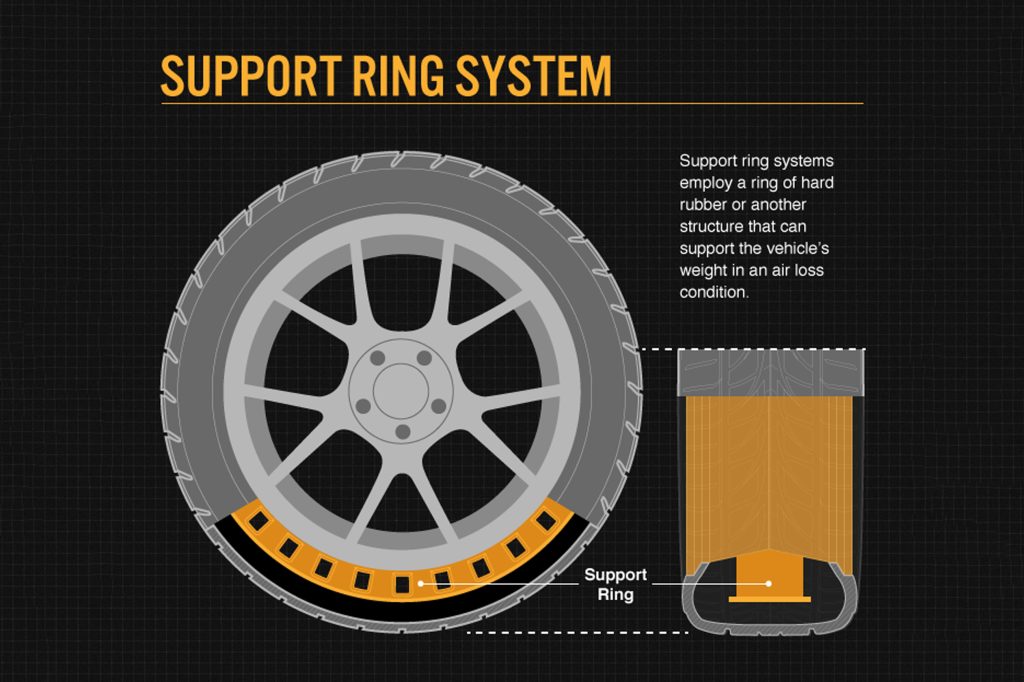
The engineering behind run flat technology is designed to support the vehicle’s weight even without air pressure in the tire. When a tire loses air due to puncture or ballistic damage, the run flat insert acts as a structural support between the wheel rim and the tire.
This allows the driver to maintain control of the vehicle while continuing to drive at moderate speeds. Unlike standard tires that collapse immediately, the reinforced internal structure keeps the tire functional for a limited distance.
Modern run flat systems are also designed to withstand heavy loads, making them suitable for the additional weight of armoured vehicles.
Advantages of Run Flat Systems
Installing this system provides several important benefits for armoured vehicles.
1. Improved Safety
Passengers remain mobile even after tire damage, reducing the risk of being stranded in dangerous areas.
2. Operational Continuity
Security teams can continue their mission without immediate tire replacement.
3. Enhanced Vehicle Control
Drivers maintain steering stability and control after a puncture.
4. Compatibility With Armoured Vehicles
Run flat systems are engineered to support the additional weight of armour and reinforced vehicle components.
AAT ArmourTech and Advanced Run Flat System Integration
At AAT ArmourTech, every armoured vehicle is engineered with mobility and protection in mind. Our vehicles incorporate advanced run flat system technology to ensure that tire damage does not compromise passenger safety or vehicle performance. Whether it is a VIP protection vehicle or a specialized law enforcement unit, our armouring process includes mobility solutions designed for Pakistan’s challenging road conditions.
>> Explore our armoured vehicle solutions:
FAQs
1. What is a run flat system in armoured vehicles?
A run flat system allows a vehicle to continue driving even after the tire loses air pressure by using reinforced inserts inside the tire.
2. How far can a vehicle travel with a run flat system?
Most run flat systems allow vehicles to travel approximately 50–80 kilometers after a puncture at moderate speeds.
3. Why are run flat systems important for armoured vehicles?
They ensure that the vehicle remains mobile after tire damage, allowing passengers to escape dangerous situations safely.
4. Can run flat systems handle the weight of armoured vehicles?
Yes. Run flat inserts used in armoured vehicles are specifically engineered to support the additional weight of ballistic protection.
5. Are run flat systems suitable for Pakistan’s road conditions?
Yes. They are highly beneficial for Pakistan’s varied terrain, including urban roads, mountainous regions, and remote rural areas.