
Pakistan’s threat environment does not offer the luxury of guessing. Whether you are moving through the outskirts of Peshawar, running escort operations in Balochistan, or managing field teams in volatile corridors, the vehicle under you is either built for the situation or it is not. For most operators in this region, that conversation comes down to two platforms: the bulletproof Toyota Revo and the bulletproof Hilux. Both are built on Toyota’s iconic ladder-frame chassis. Both can be armoured to B6 standard. But they are not the same vehicle, and the difference matters more than most buyers realize before it is too late.
This guide breaks down the bulletproof Revo vs bulletproof Hilux comparison properly, so you can match the right platform to your actual mission.
>> Related Post: Armoured Upgrades for Toyota Hilux in Pakistan: What You Need to Know
Why the Bulletproof Revo vs Bulletproof Hilux Comparison Matters for Armoured Pickup Buyers
The Stakes of Picking the Wrong Platform
Most buyers approaching an armoured pickup comparison focus on the protection rating. That is understandable, but it is only half the equation. A B6 Revo and a B6 Hilux will both stop high-powered rifle fire. What they will not do equally well is perform under every operational condition.
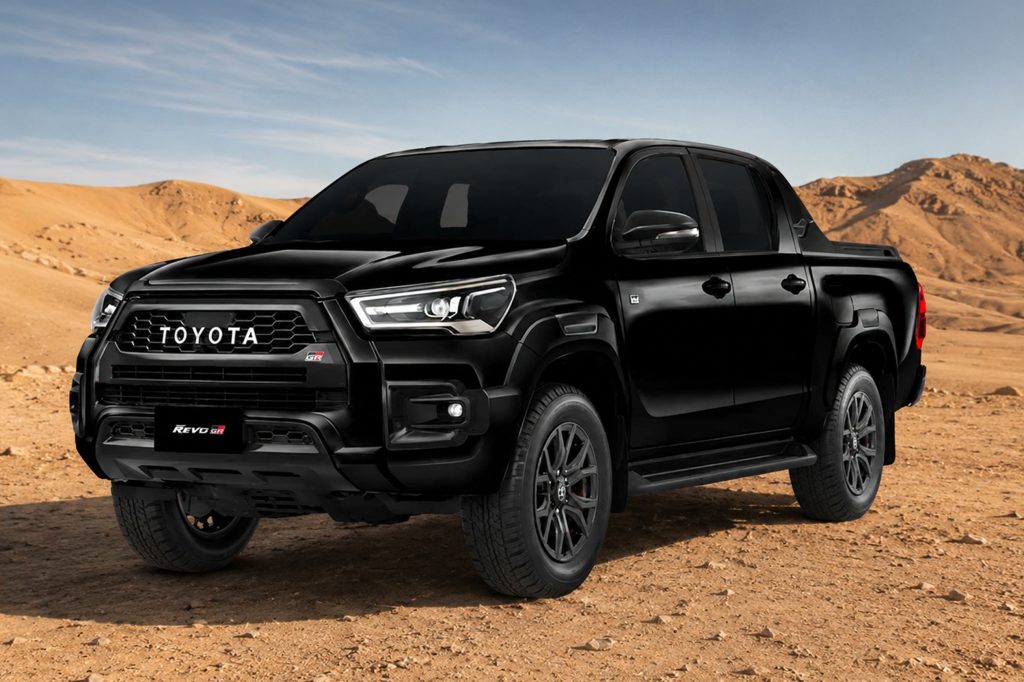
The Revo is the SC/DC (Single Cab / Double Cab) variant of Toyota’s current-generation Hilux platform. In Pakistan’s market, the older Hilux generation is still widely referred to simply as the Hilux. Both share the same DNA, but they differ in cabin configuration, weight distribution, interior capacity, and how they respond to added armour mass. Choosing without understanding these differences is how security teams end up with a vehicle that works on paper but creates problems in the field.
According to Data Bridge Market Research, the trucks and buses segment of the armoured civilian vehicles market is expected to witness the fastest growth from 2025 to 2032, driven by increasing demand for group transport and convoy-based protection in politically unstable or high-threat regions. Pakistan sits squarely in that demand picture, and the Revo and Hilux are the two platforms capturing most of it.
>> Ready to spec the right armoured pickup for your operation? Contact AAT ArmourTech for a mission-specific recommendation.
B6 Revo vs B6 Hilux: What the Armoured Pickup Comparison Actually Covers
Understanding Protection Ratings Before You Compare
Before getting into the platforms themselves, it is worth being clear on what B6 means in both cases. B6 protection is certified to stop 7.62x51mm NATO and AK-47 rounds. It is the accepted standard for corporate security, NGO field operations, law enforcement patrol, and high-risk executive transport in Pakistan’s operating environment. Both the B6 Revo and the B6 Hilux can be built to this standard when engineered correctly.
What changes between the two is not the protection level. It is the base vehicle’s ability to carry that protection without compromising performance. That is where the real comparison begins.
The Core Differences Between the Bulletproof Revo and Bulletproof Hilux
Here is a side-by-side breakdown of where the two platforms diverge:
- Cab configuration: The Revo is available in both single cab and double cab formats, giving buyers flexibility in passenger capacity. The older Hilux is typically a double cab in the configurations most commonly armored in Pakistan.
- Interior space: The Revo DC offers more usable rear cabin space, which matters for teams that need to carry personnel, equipment, or both.
- Armouring weight response: The Revo’s updated suspension geometry handles added armour mass more predictably. The older Hilux requires more aggressive suspension upgrades to achieve the same handling stability under load.
- Parts availability: Both platforms have wide parts availability across Pakistan, but the Revo benefits from Toyota’s more current supply chain, which reduces sourcing delays for specialist components.
- Technology integration: The Revo’s more modern electrical architecture makes integrating surveillance systems, GPS tracking, and communication hardware more straightforward.
- Ground clearance: Both offer strong off-road clearance, but the Revo’s revised chassis geometry gives it a marginal advantage on uneven terrain when carrying full armour load.
Neither vehicle is universally better. Each is better suited to a specific kind of operation, and that is what the next sections address directly.
>>Related Post: How to Choose Armoured Pickup Trucks for Security Teams 2026
When the B6 Revo Is the Right Choice for Your Armoured Pickup Comparison
The Revo Wins on Modern Architecture and Crew Capacity
The bulletproof Revo is the stronger choice when your operation requires consistent multi-person transport, advanced system integration, and regular inter-city movement. Its double cab configuration comfortably seats a driver, a front passenger, and a full rear crew, making it the preferred platform for close protection teams, NGO field personnel, and corporate convoys that need a vehicle capable of moving a full team without splitting into multiple vehicles.
Its updated suspension geometry also means that the engineering required to compensate for armour weight is less intensive. A properly upgraded B6 Revo maintains handling stability that is closer to the original factory dynamic than an equivalently armoured older Hilux. For teams where the driver may not be a specially trained tactical operator, that predictability is a meaningful safety margin.
The Revo’s electronics architecture is another practical advantage. Integrating a 360-degree surveillance system, real-time GPS tracking, and an external intercom system into the Revo’s platform is a cleaner process. Fewer workarounds mean fewer potential failure points in the field.
According to Market Research Future, the armoured civilian vehicles market is expected to reach a valuation of USD 1.2 billion by 2026, driven by corporations increasingly recognizing the importance of employee safety and rising investment in secure transportation for executives in high-risk sectors. The Revo is positioned at the centre of that corporate demand because of its balance between protection, capacity, and operational refinement.
The armoured Toyota Hilux Revo SC/DC built by AAT ArmourTech is certified to B6/B6+ ballistic protection and comes fully equipped with run-flat tires, upgraded braking and suspension, and optional 360-degree surveillance with real-time monitoring. It is one of the most comprehensively engineered platforms available in Pakistan for this purpose.
>> See what a certified B6 Revo build looks like. Request specifications from AAT ArmourTech today.
When the Bulletproof Hilux Is the Right Choice in the Armoured Pickup Comparison
The Hilux Wins on Proven Ruggedness and Operational Familiarity
The bulletproof Hilux has a longer track record in Pakistan’s most difficult environments. Law enforcement units, border patrol agencies, and field security teams across KPK, Balochistan, and FATA have been running armoured Hilux platforms for years. That operational familiarity translates into real-world advantages that are easy to underestimate on a spec sheet.
Mechanics across Pakistan know this vehicle. Technicians who have never worked on a newer platform can service and repair an older Hilux in the field. In extended operations far from Islamabad or Karachi, that matters more than any technical advantage the Revo brings in controlled conditions.
The Hilux also has a cultural legibility in high-risk operating zones that the newer Revo is still building. Security teams in volatile regions often prefer vehicles that blend into the operational environment. In many of those environments, the older Hilux is simply the vehicle people expect to see, which reduces the visual profile of a convoy or patrol.
For law enforcement clients and government agencies operating with existing Hilux fleets, there is also a maintenance standardization argument. Running mixed platforms creates logistical complexity. Armouring additional Hilux units to maintain fleet consistency is often the more operationally sound decision than introducing a second platform.
The armoured pickup trucks category at AAT ArmourTech includes both the Revo SC/DC and Hilux variants, engineered with FB6+ ballistic steel, EN 1063 B6+ glass, and optional STANAG Level 1-2 underbody blast protection for high-threat border environments.
>>Related Post: 3 Reasons Pickup Trucks Are Being Armoured for Tactical Use
Key Specs to Evaluate in Any Bulletproof Revo vs Bulletproof Hilux Decision
What to Check Before You Commit to Either Platform
Both vehicles need to meet the same minimum engineering standards to qualify as a serious armoured platform. Regardless of which one you choose, the build must cover these elements without compromise.
The protection stack needs to include certified FB6+ ballistic steel across all critical zones, multi-hit EN 1063 B6+ glass on every window and the windscreen, and a fully sealed armouring capsule with integrated spall liner. Run-flat tire systems are non-negotiable for any platform operating in Pakistan’s inter-city or field environments. Upgraded suspension and braking systems are mandatory because armour weight without those compensating upgrades creates handling and stopping distance problems that override any ballistic advantage.
Surveillance integration and GPS tracking are not optional extras for serious operations. They are the difference between situational awareness before a threat materializes and reacting after one already has. Both the Revo and Hilux can carry these systems, but the installation pathway is cleaner on the Revo.
According to Market Research Future, the global armoured civilian vehicles market was valued at USD 3,098.84 million in 2021 and is anticipated to reach USD 5,252.43 million by 2030, with wealthy individuals, corporate clients, and government officials driving demand for vehicles that combine certified protection with operational practicality. Both the B6 Revo and the B6 Hilux serve this buyer profile, but they serve it differently depending on the mission.
Why AAT ArmourTech Builds Both the B6 Revo and B6 Hilux for Pakistan’s Armoured Pickup Market
AAT ArmourTech engineers every armoured pickup entirely in-house at their Islamabad facility. There are no subcontractors and no split accountability. One team controls the build from design to final inspection, which means certification standards are maintained across every vehicle without exception.
Every B6 Revo and B6 Hilux that leaves the facility comes with a complete documentation pack including material test logs, certification reports, and third-party ballistic test records. Whether you are a procurement officer for a law enforcement agency, a corporate security director, or a private operator, that paperwork is not a formality. It is the proof that the vehicle performs to the standard it claims.
AAT ArmourTech’s after-sale service infrastructure means the relationship does not end at handover. Fleet maintenance, urgent repairs, and ongoing technical support are built into the ownership experience. For clients running multiple vehicles across high-risk routes, that continuity of support is a critical operational asset.
>> Not sure whether the B6 Revo or B6 Hilux is right for your threat environment? Talk to AAT ArmourTech and get a tailored assessment before you decide.
FAQs: Bulletproof Revo vs Bulletproof Hilux
1. What is the main difference between the bulletproof Revo and the bulletproof Hilux?
The Revo is the newer-generation Toyota Hilux platform with an updated chassis, improved suspension geometry, and more modern electrical architecture. The older Hilux has a longer operational track record in Pakistan’s field environments and benefits from wider mechanical familiarity among local technicians. Both can be armoured to B6 standard, but they perform differently under operational conditions depending on mission type, crew size, and terrain.
2. Which platform is better for corporate executive transport?
The B6 Revo is generally the stronger choice for corporate executive transport. Its double cab configuration accommodates a full protection team, its updated suspension manages armour weight more predictably, and its electronics architecture makes integrating GPS, surveillance, and communication systems more straightforward for urban and inter-city operations.
3. Is the B6 Hilux better suited to law enforcement and field operations?
Yes. The Hilux has a longer operational history with Pakistan’s law enforcement and border security agencies. Mechanics across high-risk regions are familiar with the platform, spare parts are widely available outside major cities, and the vehicle’s established presence in volatile zones reduces visual profiling risks for patrol and rapid response units.
4. What does B6 protection actually stop?
B6 protection is certified to stop 7.62x51mm NATO rounds and AK-47 fire. It is the internationally accepted minimum standard for corporate security, diplomatic protection, NGO field operations, and high-risk executive transport in threat environments like those found across Pakistan’s major operating corridors.
5. Do both vehicles need suspension and brake upgrades when armoured?
Yes, without exception. Adding ballistic steel and multi-layer glass increases vehicle weight significantly. Without properly engineered suspension and brake system upgrades, that additional mass compromises handling, increases stopping distances, and creates safety risks that negate the protection the armour is supposed to provide. A correctly built armoured pickup addresses this at the engineering stage, not as an afterthought.
6. Can either platform carry underbody blast protection?
Both platforms support optional STANAG Level 1-2 underbody blast protection for IED and mine threats. This is a separate specification from standard B6 ballistic protection and needs to be requested specifically based on the operating environment. It adds weight and complexity to the build but is the right call for operations in border regions and areas where roadside threats are a documented risk.
7. How long does it take to build an armoured Revo or Hilux?
A standard B6 build typically takes four to six weeks depending on the platform, protection level, and any custom configurations required. Builds with additional specialist fitments such as underbody blast protection, intercom systems, or roof escape hatches will extend the timeline. Your supplier should provide a firm delivery schedule with the build specification.
8. Does armouring affect the vehicle’s off-road performance?
Properly engineered armouring has a minimal impact on off-road performance when the suspension, brakes, and chassis have been upgraded to compensate for the added weight. A poorly built armoured vehicle will handle badly both on and off-road. The key is working with a supplier who upgrades the mechanical systems alongside the ballistic systems, not just adding armour to a factory-standard vehicle.
9. What surveillance and communication systems can be integrated into these platforms?
Both the Revo and Hilux can be fitted with 360-degree surveillance systems with real-time monitoring, GPS tracking, external intercom systems, panic alarms, and radio communication hardware for convoy coordination. The Revo’s newer electrical architecture makes integration more straightforward, but both platforms support full tactical fitments when engineered correctly.
10. Why does it matter whether a supplier builds in-house or uses subcontractors?
When a vehicle is built by a single team under one roof, accountability is clear at every stage of the process. If something is not right, there is no subcontractor to blame and no excuse for it not being fixed. For a vehicle designed to protect lives in a high-threat environment, that accountability is not a secondary consideration. It is the foundation of whether the build can actually be trusted.