
Buyers shopping for armoured vehicles in Pakistan often assume run flat tyres and bulletproof tyres are the same thing. They are not, and the confusion can lead to a build that looks protected on paper but fails at the exact moment it matters. Understanding run flat tyres vs bulletproof tyres properly is not a technical detail you can skip. It directly affects whether your vehicle keeps moving after an attack or a puncture on rough terrain.
This guide breaks down what each term actually means, how the technology behind them differs, and which armoured vehicle tyres are right for your specific platform.
>>Related Post: Run Flat Tyres for Armoured Vehicles
Run Flat Tyres vs Bulletproof Tyres: What Each Term Actually Means
What “Bulletproof Tyres” Really Refers To
There is no such thing as a tyre that fully stops a bullet the way ballistic steel or bulletproof glass does. The term bulletproof tyres is largely a marketing shorthand, and this is the core of the bulletproof tyres myth that misleads many first-time buyers. What these tyres actually offer is the ability to keep functioning after being hit, not immunity from being hit at all.
What a Run Flat System Actually Does
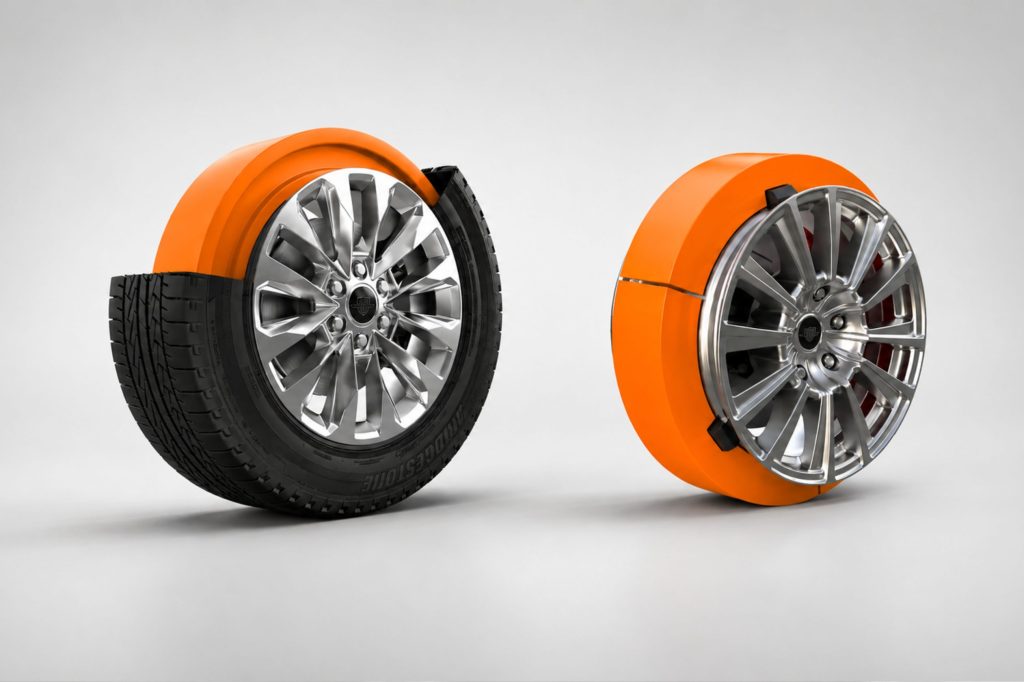
A run flat system is the real engineering behind that capability. It uses reinforced sidewalls or an internal support ring that carries the vehicle’s weight once air pressure is lost. The tyre does not stop the round from entering. It simply refuses to collapse afterward, which is the distinction that matters in the run flat tyres vs bulletproof tyres debate.
Why the Terms Get Confused in Pakistan’s Market
Suppliers sometimes use bulletproof tyres and run flat tyres interchangeably because both terms sound protective to a buyer unfamiliar with the mechanics. That habit does buyers a disservice. Knowing the exact function of your armoured vehicle tyres before signing off on a build protects both your budget and your safety expectations.
>>Related Post: How Bulletproof Glass Actually Works: A Step-by-Step Breakdown
Run Flat Tyres vs Bulletproof Tyres: How the Technology Compares
Self-Supporting Run Flat Tyres vs Run Flat Inserts
Self-supporting tyres rely on a stiffened sidewall built into the tyre structure itself. Run flat inserts are a separate polyurethane or composite ring fitted inside a standard tyre. The run flat system selected depends on the vehicle’s weight, terrain, and how much of the profile needs to stay discreet.
Where Self-Sealing Tyres Fit Into the Picture
Self-sealing tyres are a third category entirely, and they are often mistaken for both of the others. These tyres contain an internal sealant layer that closes small punctures automatically, which works well for nails and road debris. Self-sealing tyres are not built to handle the sustained load of an armoured vehicle after multiple simultaneous punctures from gunfire, which is where a proper run flat system takes over instead.
According to Market.us, the self-sealing tire market was valued at USD 17.1 billion in 2023 and is projected to reach USD 38.3 billion by 2033. That growth reflects rising interest in puncture-resistant tyre technology across ordinary passenger vehicles, not the armoured sector specifically. It is a useful signal of how mainstream this thinking has become, even if the application is different for a security build.
Ballistic Resistance vs Puncture Resistance
Ballistic resistance is a property of the vehicle’s steel and glass, tested and rated under recognized international standards. Puncture resistance and post-puncture mobility are properties of the tyre and run flat system working together. Treating these as the same protection layer is the mistake that leads buyers to under-specify their armoured vehicle tyres.
>>Related Post: Armoured Upgrades for Toyota Hilux in Pakistan: What You Need to Know
Run Flat Tyres vs Bulletproof Tyres: Which Armoured Vehicle Tyres You Actually Need
Different platforms call for different tyre strategies, and there is no single answer that fits every build. The right choice depends on how the vehicle will be used and how visible the protection is allowed to be.
- Executive sedans generally use self-supporting run flat tyres to preserve a discreet, standard appearance in urban traffic
- SUVs and pickup platforms generally use run flat inserts rated for heavier armoured gross weight and rougher terrain
1. For Executive Sedans and Urban Protection
Discretion matters most for sedans used in city environments where drawing attention defeats the purpose of the protection. Self-supporting run flat tyres keep the vehicle looking unmodified from the outside. This is the preferred configuration for armoured sedans built for executive travel.
2. For SUVs and Land Cruiser Platforms
Land Cruiser and Prado builds carry significantly more armoured weight than a sedan, often exceeding four thousand kilograms once steel and glass are installed. These platforms need to run flat inserts rated for that specific gross weight, not a generic passenger car specification. A properly built armoured SUV always accounts for this during the engineering phase.
3. For Pickup Trucks and Field Operations
Field and patrol vehicles face rough, unpaved terrain in addition to any direct threat exposure. Polyurethane run flat inserts hold up better here because they can be serviced without specialized equipment in remote locations. This is standard practice across armoured pickup trucks built for Pakistan’s northern and border regions.
According to Expert Market Research, the global run flat tyre market is projected to grow at a CAGR of 4.50% between 2026 and 2035, driven largely by rising awareness of post-puncture mobility across vehicle classes. That trend lines up closely with what security buyers in Pakistan are already prioritizing in their armoured builds.
>>Not sure which tyre specification your build actually needs? Contact AAT ArmourTech and get a tailored recommendation for your platform.
Why AAT ArmourTech Gets Run Flat Tyres vs Bulletproof Tyres Right
Every vehicle built by AAT ArmourTech is specified with a run flat system matched to its actual armoured gross weight, not a generic industry estimate. There is no confusion between marketing language and real engineering in how these builds are documented. Buyers receive a clear breakdown of what their armoured vehicle tyres are rated for and why that specification was chosen, so there is no ambiguity between run flat capability and ballistic resistance. Learn more about how the team approaches every build on the AAT ArmourTech about page.
>>Ready to specify the right run flat system for your vehicle? Speak to AAT ArmourTech and get a documented tyre specification for your exact threat environment.
FAQs
1. What is the real difference between run flat tyres vs bulletproof tyres?
Run flat tyres are engineered to keep a vehicle mobile after air pressure is lost, using reinforced sidewalls or an internal insert. Bulletproof tyres is a marketing term without a strict technical definition, and no tyre actually stops a bullet the way armoured steel or glass does. The real protective value in both cases comes from the run flat system, not from any claim of ballistic immunity in the rubber itself.
2. Is the term bulletproof tyres a myth?
Largely, yes. The bulletproof tyres myth suggests the tyre itself resists penetration, when in reality it is the run flat mechanism that keeps the vehicle moving after damage. Buyers should ask suppliers to explain exactly what system is installed rather than accepting the term at face value. Precise language protects you from paying for a specification that does not match what you actually receive.
3. How do self-sealing tyres differ from run flat tyres?
Self-sealing tyres use an internal sealant that closes small punctures automatically, which works well for nails and general road hazards. Run flat tyres use structural reinforcement to keep the vehicle mobile even after a larger puncture or multiple simultaneous punctures. For armoured vehicles facing gunfire or IED threats, a run flat system is the appropriate choice over self-sealing technology alone.
4. Which armoured vehicle tyres are best for a Land Cruiser build?
Land Cruiser and Prado platforms typically use run flat inserts rated for their armoured gross weight, which often exceeds four thousand kilograms once steel and glass are installed. Insert-based systems handle this load more reliably than self-supporting tyres on heavier platforms. The exact specification should always be matched to the individual vehicle’s build weight rather than a generic estimate.
5. Do executive sedans need the same tyre setup as SUVs?
No. Executive sedans generally use self-supporting run flat tyres because they preserve a standard, unmodified appearance that supports discreet urban protection. SUVs and pickups typically use insert-based systems because they carry more weight and operate in rougher conditions. Matching the tyre type to the vehicle’s actual use case is part of a properly engineered build.
6. How far can a vehicle travel after a run flat system is activated?
Most run flat systems allow continued driving for roughly fifty to eighty kilometres at reduced speed after pressure loss. The exact distance depends on the type of system installed, the vehicle’s weight, and the road surface. A reliable supplier will provide documented performance figures specific to the system fitted on your vehicle.
7. Can run flat inserts be added to an existing armoured vehicle?
In most cases, yes, provided the tyre and rim combination is compatible with the insert and it is rated for the vehicle’s current armoured weight. Retrofitting should always be handled by a qualified armoured vehicle specialist who can confirm compatibility. An incorrectly matched insert can fail under load, which defeats the purpose of installing it in the first place.
8. Are bulletproof tyres included as standard on armoured builds?
Some suppliers still treat run flat capability as an optional upgrade rather than a baseline requirement, which is a serious gap in protection. Any properly engineered armoured vehicle should include a documented run flat system by default. Buyers should confirm this explicitly before signing off on a build rather than assuming it is included.
9. Does a run flat system affect ride quality?
There is some change in ride feel, particularly with insert-based systems on heavier platforms, because the added internal structure creates a firmer ride. When suspension and braking are calibrated for the vehicle’s actual armoured weight, this trade-off becomes minor. The stability gained after a puncture far outweighs the small reduction in ride comfort.
10. Why does AAT ArmourTech separate run flat tyres vs bulletproof tyres in its documentation?
Clear terminology prevents buyers from misunderstanding what protection they are actually paying for. AAT ArmourTech documents the exact run flat specification, load rating, and performance data for every vehicle it builds. This transparency ensures there is no gap between what a client expects from their armoured vehicle tyres and what has actually been installed.