
If you have ever searched for the bulletproof car cost in Pakistan and come back with no clear answer, you are not alone. Prices in this industry are rarely published openly because no two builds are truly identical. Protection levels, base vehicles, material grades, and additional features all pull the final number in different directions. What one buyer pays for a discreet executive sedan will look nothing like what a law enforcement agency spends on a tactical pickup.
This guide breaks down the real cost of armoured vehicles in Pakistan, what drives those numbers, and what you should watch out for before committing to a supplier.
>>Related Post: Bulletproof Cars in Pakistan: What Civilians Need to Know Before Buying
What Actually Determines Bulletproof Car Cost in Pakistan
The Base Vehicle Is Your Starting Point
The vehicle you choose to armour has a direct impact on how expensive the final build becomes. A Toyota Land Cruiser, for instance, starts at a significantly higher price point than a Toyota Hilux before a single piece of ballistic steel is added. Larger vehicles with more surface area also require more material to protect every panel, door, roof section, and glass opening. This is not just about the sticker price of the car itself; it is about how much raw armouring material the build will consume.
The engine and suspension of the base vehicle also factor in. When you add hundreds of kilograms of ballistic steel and reinforced glass to a car, the factory suspension and braking system simply cannot handle that weight safely. Upgraded components are not optional. They are a structural requirement, and they add to the total cost.
Protection Level Changes Everything
The single biggest variable in armoured vehicle price in Pakistan is the protection level you specify. Builds are certified to international ballistic standards, primarily the European EN 1063 scale, which ranges from B4 through B7. Each step up the scale requires thicker, heavier, and more expensive ballistic steel and glass.
A B4 build, which protects against handgun fire, sits at the lower end of the cost range and is used mostly in low-to-medium risk environments. B6 protection, rated to stop high-powered rifle rounds, is the most common choice for corporate executives, NGO personnel, and private clients operating in Pakistan’s more volatile regions. B7 goes further still, designed to defeat armor-piercing rifle ammunition, and is primarily used by government and military clients. Each level represents a meaningful jump in material costs, fabrication time, and overall investment.
Material Quality Is Not a Place to Cut Corners
Not all ballistic steel is the same. Certified materials sourced from internationally recognized suppliers behave very differently under fire than uncertified alternatives that look identical on a specification sheet. The same is true for ballistic glass, which in a quality build is a multi-layered laminate system engineered to absorb and dissipate impact rather than simply crack. Suppliers who cut costs on materials can offer lower prices, but the vehicle will not perform when it matters. That trade-off is not worth making.
According to Mordor Intelligence, the global armored vehicles market is forecast to grow from USD 30.42 billion in 2025 to USD 42.18 billion by 2031, a trajectory driven in large part by rising demand for certified civilian and law enforcement protection globally.
>>Related Post: B6 vs B7 Armouring: Which Protection Do You Need?
Armoured Vehicle Price in Pakistan by Vehicle Type and Protection Level
1. Armoured SUVs
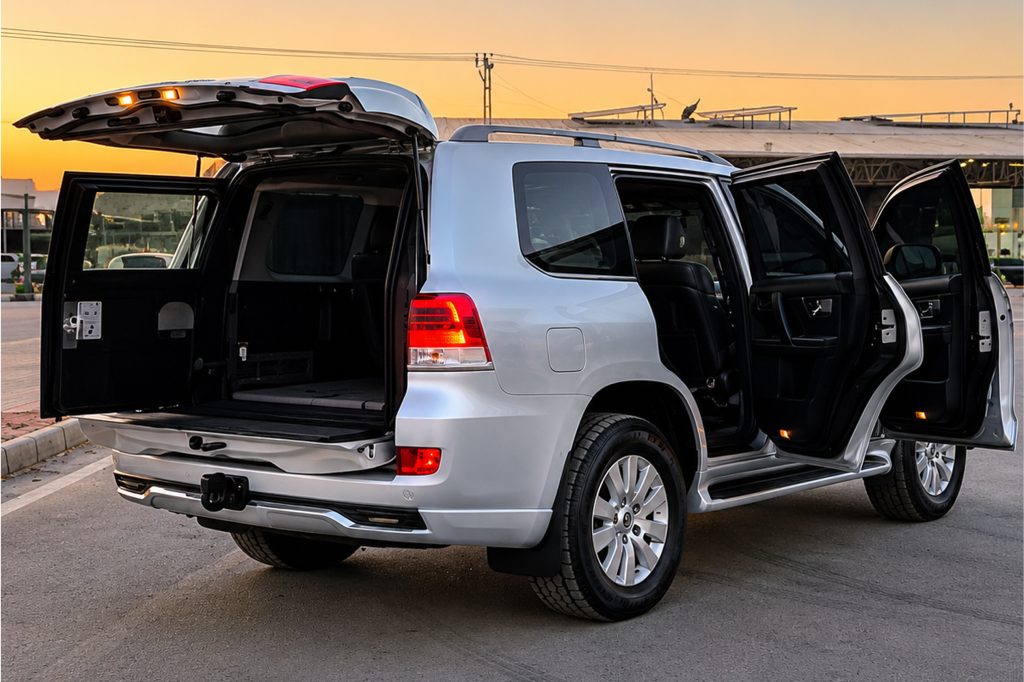
Armoured SUVs are the most commonly requested platform in Pakistan for executive protection and diplomatic use. The Toyota Land Cruiser and Land Cruiser Prado are by far the most popular choices, partly because their factory construction handles additional weight better than most vehicles in their class. At B6 protection, a professionally built armoured SUV in Pakistan typically falls in the range of PKR 35 million to PKR 50 million depending on the model year, optional features, and the reputation of the manufacturer. This range reflects the cost of the base vehicle combined with certified armouring materials, suspension and brake upgrades, run-flat tire systems, and any additional electronics.
2. Armoured Sedans
Armoured sedans appeal to clients who need protection without the visual footprint of a large SUV. Vehicles like the BMW 7 Series, Mercedes-Benz S-Class, or Toyota Camry can be converted to carry certified ballistic protection while maintaining a low-profile appearance on the road. Because sedans have less structural mass to work with than an SUV, the engineering challenge is actually greater. These builds tend to be priced similarly to entry-level armoured SUVs at B6, though premium European sedans push costs higher due to the base vehicle price itself.
3. Armoured Pickup Trucks
The Toyota Hilux has become one of the most commonly armoured platforms in Pakistan because of how well its ladder-frame construction handles the added load of ballistic materials. Law enforcement agencies, NGOs, and corporate security teams all operate armoured pickups in the field. A certified B6 build on a Hilux typically comes in below the Land Cruiser price point, which makes it a practical choice for organizations that need a fleet of protected vehicles rather than a single executive car.
4. Cash-in-Transit Vehicles
Cash-in-transit vehicles are built differently from passenger protection platforms. Their priority is securing cargo compartments against forced entry and ballistic penetration from multiple angles simultaneously. These builds typically involve custom fabrication beyond simple panel replacement, and the cost reflects that additional engineering work. Banks, financial institutions, and logistics companies operating across Pakistan rely on these platforms, and the armoured vehicle price in this category reflects the level of customization involved.
>>If you need clarity on which protection level is right for your situation, speak with the AAT ArmourTech team before committing to a build.
B6 Armoured Car Cost vs B7: Understanding the Price Gap
What B6 Protection Covers
B6 is the protection level most buyers in Pakistan actually need. It is certified to stop 7.62x51mm NATO rifle fire, which covers the majority of realistic threat scenarios faced by corporate executives, NGOs, diplomatic missions, and private clients. The ballistic glass in a B6 build is thick enough to absorb high-velocity rounds without shattering into the cabin, and the steel in the doors, roof, floor, and pillars is rated to the same standard.
The B6 armoured car cost in Pakistan typically represents the best balance between protection capability and total investment. You are not paying for threat resistance you do not need, but you are also not leaving yourself exposed to the most commonly encountered firearms in high-risk parts of the country.
What Justifies the Step to B7
B7 protection is certified against armor-piercing rifle rounds, the kind of ammunition used in military-grade weapons. The materials required at this level are substantially heavier and more expensive, and the engineering demands on the vehicle’s suspension and structure increase accordingly. B7 builds are primarily used by government agencies, military escorts, and clients who have a documented threat assessment requiring that level of protection. For most corporate and civilian clients, B7 is a significant cost increase for protection against a threat profile they are unlikely to encounter.
The Role of Blast Protection
Both B6 and B7 ratings address ballistic threats only. If your operational environment includes the risk of roadside explosive devices, underbody blast protection is a separate specification entirely. It is governed by standards like STANAG 4569 and must be explicitly requested and built into the vehicle from the outset. Adding blast protection meaningfully increases the total cost and the engineering complexity of the build.
According to Grand View Research, the global armored vehicle market was valued at USD 32.41 billion in 2024 and is projected to reach USD 44.56 billion by 2030 at a CAGR of 5.4%, reflecting how rapidly demand for certified protection platforms is expanding worldwide.
>>Related Post: Run Flat Tyres for Armoured Vehicles
Hidden Costs Most Buyers Overlook When Pricing an Armoured Vehicle in Pakistan
After-Sale Maintenance
A bulletproof car is not a standard vehicle and cannot be maintained at a standard workshop. The ballistic glass, reinforced door hinges, run-flat tire systems, and upgraded suspension components all require specialist knowledge and often specialist parts. When you are evaluating armoured vehicle price in Pakistan, the ongoing cost of proper maintenance needs to be part of that calculation. A supplier who does not offer a dedicated after-sale service facility is essentially selling you a vehicle they will not stand behind.
Certification and Documentation
Not every supplier includes proper ballistic test reports, material certification documents, and third-party verification records in their standard build package. This documentation is not a formality. It is the evidence that what you paid for was actually built correctly. Buyers who overlook this at the point of purchase often discover its absence only when they need to verify compliance for an insurer, a procurement review, or a government authority. Always confirm that the price you are quoted includes a complete documentation package.
Customization and Optional Systems
Beyond the core build, there are several add-ons that buyers in Pakistan regularly specify, each of which increases the total armoured vehicle price:
- Run-flat tire systems that allow the vehicle to keep moving even after tire damage in a threat scenario
- 360-degree camera arrays for real-time situational awareness around the vehicle
- GPS tracking and communications systems for fleet management and emergency response
- Upgraded interior configurations including reinforced seating, intercom systems, and privacy glass tinting
- Secondary fire suppression systems for high-risk operational environments
Being clear about what you actually require upfront will prevent scope creep from inflating your budget after the build has started. Prioritize by operational need and discuss each option with your supplier before signing off on a final specification.
According to Market Research Future, the civilian and security armoured vehicle market is projected to reach USD 57.33 billion by 2035, with law enforcement and cash-in-transit among the fastest-growing segments globally.
>>Related Post: Armoured Vehicle Upgrade Checklist: What’s Worth The Inspection
Why AAT ArmourTech Offers the Most Transparent Armoured Vehicle Price in Pakistan
AAT ArmourTech builds every vehicle in-house at their Islamabad facility, which means there are no third-party contractors adding layers of cost and ambiguity to the process. One team handles the entire build from design through final inspection, and the full documentation pack, including material test logs, certification reports, and component records, comes standard with every vehicle they produce.
Their fleet covers the full range of protection needs, from armoured pickup trucks built for field operations to executive SUVs and law enforcement platforms designed for rapid response. Every build can be specified to exact protection levels and customized to match the operational requirements of the buyer, whether that means B6 corporate protection or a fully equipped tactical vehicle for high-risk environments.
The transparency of their process means buyers know exactly what they are paying for and why. When you request a quote from AAT ArmourTech, you get a breakdown that reflects real material costs, real engineering requirements, and a real after-sale commitment. That is a meaningful difference in an industry where vague pricing is the norm.
>>Your security should not be priced as a mystery. Contact AAT ArmourTech today and get a detailed quote built around your actual threat environment.
FAQs
1. What is the average bulletproof car cost in Pakistan in 2026?
The range is wide because no two builds are the same. At the B6 protection level, armoured vehicles in Pakistan generally fall between PKR 15 million and PKR 50 million depending on the base vehicle, the scope of protection, optional systems added, and the quality of materials used. A Toyota Hilux with certified B6 armouring will cost significantly less than a Land Cruiser built to the same standard. The most reliable way to get an accurate number is to request a formal quote from a certified manufacturer after specifying your exact protection requirements.
2. What makes armoured vehicle price in Pakistan vary so much between suppliers?
The biggest factors are material quality, protection level, whether the supplier builds in-house or outsources, and what is included in the final package. A supplier using uncertified ballistic materials can quote a lower price, but the vehicle will not meet the protection standard it claims. In-house manufacturing eliminates contractor markups and ensures quality control throughout the build. Documentation, after-sale service, and warranty coverage are also reflected in the price, and their absence is not a saving worth making.
3. How does B6 armoured car cost compare to B7 in Pakistan?
A B7 build costs more than a comparable B6 build because the ballistic materials required at the higher rating are heavier, more expensive to source, and more demanding to install correctly. The vehicle also requires stronger suspension, heavier-duty brakes, and more robust structural reinforcement to carry the additional weight. For most civilian, corporate, and NGO clients in Pakistan, B6 provides the protection needed without the premium associated with armor-piercing resistance. B7 is typically specified by government bodies, military clients, and those with a documented threat assessment requiring that level of capability.
4. Does blast protection come included in the standard armoured vehicle price in Pakistan?
No. Underbody blast protection is a separate specification governed by standards such as STANAG 4569 and must be explicitly requested. It is not part of a standard B6 or B7 build and adds meaningful cost and engineering complexity to the project. Most corporate and civilian clients in Pakistan do not require it. It is primarily specified for clients operating in areas with a documented risk of roadside explosive devices or conflict-zone operations.
5. Is the bulletproof car cost in Pakistan higher for European brands than Japanese platforms?
Yes, generally. The base vehicle price is a significant component of the total build cost, and European luxury vehicles like BMW or Mercedes-Benz carry a higher starting price than Japanese platforms like the Toyota Land Cruiser or Hilux. The armouring process itself costs broadly the same for vehicles of similar size and protection level, but the premium paid for the base vehicle passes through to the final price. Japanese platforms remain the dominant choice in Pakistan partly for this reason, and partly because their engineering handles added weight more predictably.
6. What documentation should be included in the bulletproof car cost quote?
Any legitimate quote from a credible supplier should eventually be backed by ballistic test reports for the glass and steel used, third-party certification documents, and a record of where materials were sourced. If a supplier cannot produce this documentation on request, that is a significant warning sign. Buyers who skip this verification often find themselves with a vehicle that looks armoured but has no independently verifiable protection standard. Always confirm that documentation is included before signing off on a purchase.
7. How long does it take to build an armoured vehicle in Pakistan, and does timing affect cost?
A standard certified build typically takes four to eight weeks from order confirmation to delivery. Custom configurations with additional systems, unusual base vehicles, or complex underbody protection will take longer. Rush builds, if a supplier offers them, may carry a premium. The better approach is to plan your procurement timeline in advance so the build can be completed properly without shortcuts that might compromise quality.
8. Can the armoured vehicle price in Pakistan be reduced without compromising safety?
Buyers can reduce costs by choosing a more affordable base vehicle, specifying only the protection level they actually need, and limiting optional add-ons to what is operationally necessary. What should never be compromised is the quality of ballistic materials and the certification of the build. Substituting uncertified steel or glass to lower the price is not a trade-off; it is a safety failure. A well-specified B6 build on a Hilux will protect you more reliably than a poorly built B7 build on a Land Cruiser.
9. Do armoured vehicles in Pakistan hold their resale value?
Certified armoured vehicles with full documentation generally hold value better than uncertified builds, especially among institutional buyers like banks, embassies, and security companies who require verifiable protection standards. The resale market in Pakistan is active, and a vehicle with a clean certification record and maintained service history is considerably easier to sell at a fair price than one with no paperwork trail.
10. Why is in-house manufacturing important when evaluating armoured vehicle price in Pakistan?
In-house manufacturing means a single team is accountable for every aspect of the build, from design to final inspection. There are no quality gaps introduced by outside contractors, and there is no ambiguity about who is responsible if something is not built correctly. It also eliminates subcontractor markups that inflate the price without improving the vehicle. When you are paying for protection that may one day save your life, knowing that one team built every part of it to a consistent standard is worth understanding before you commit.