
Pakistan’s banking sector moves enormous sums of physical currency every single day. Branches, ATMs, and bullion vaults all depend on vehicles that can get cash from one point to another without becoming a target along the way. This is why armoured vehicles for banking Pakistan have shifted from a nice-to-have upgrade to a baseline operational requirement for banks and cash logistics providers alike.
The risks tied to cash handling are not theoretical. Robbery attempts, route ambushes, and insider threats all push financial institutions toward vehicles built specifically for this job. Standard commercial vans simply were not engineered to withstand a coordinated attack or protect a crew under pressure.
>>Related Post: How Bulletproof Glass Actually Works
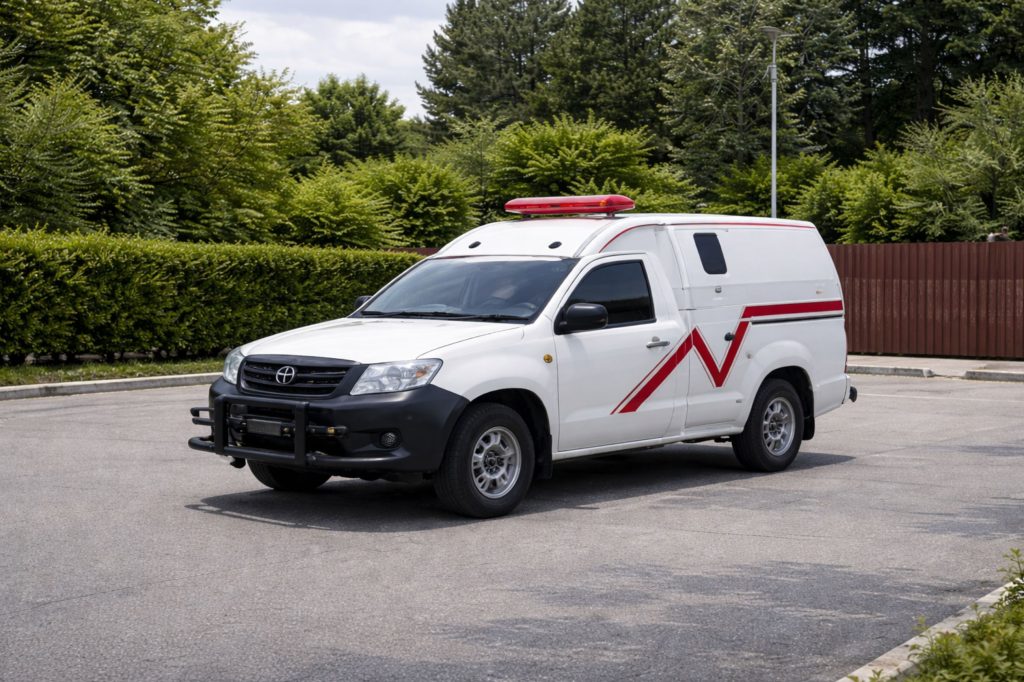
Why Armoured Vehicles for Banking Pakistan Are Now a Core Security Requirement
1. Rising Threats Facing Cash Handling Operations
Cash-in-transit crews face a different threat profile than most commercial drivers. Attacks on cash vehicles tend to be planned rather than opportunistic, which means criminals often study routes, timing, and vehicle weaknesses in advance. A vehicle without proper armouring gives attackers an easy target and very little margin for the crew inside to respond safely.
Urban branches face congestion and predictable stop points, while intercity routes carry cash through more isolated stretches of road. Both scenarios demand vehicles that can absorb an attack long enough for the crew to reach safety. This is the core reason secure cash logistics providers have moved almost entirely toward purpose-built armoured fleets.
2. Regulatory and Insurance Pressure on Financial Institutions
Banks do not make fleet decisions in isolation. Insurers, regulators, and internal risk teams all shape what a compliant cash transport vehicle looks like. A fleet that fails to meet expected ballistic and structural standards can directly affect a bank’s insurance terms and liability exposure.
3. How Compliance Standards Are Reshaping Fleet Decisions
Financial institutions are increasingly required to document the protection level of every vehicle used to move cash. This includes proof of ballistic testing, vault integrity, and crew safety features. Working with a supplier who can produce this documentation on request has become a deciding factor in vendor selection, not an afterthought.
>>Not sure if your current fleet meets banking-grade protection standards? Talk to AAT ArmourTech about a compliance review.
How Cash in Transit Vehicles Pakistan Protect Bullion and Bank Assets
Ballistic Protection Standards Built for CIT Fleets
A properly built CIT vehicle is engineered around the ballistic capsule that surrounds the crew and cargo compartment. This capsule uses certified steel plating and ballistic glass designed to resist high-powered rifle fire, not just handgun rounds. Cash in transit vehicles Pakistan operators rely on typically carry protection levels aligned with the routes and threat zones they operate in.
A properly specified CIT build usually includes the following core protection features.
- Certified ballistic steel plating across the crew and cargo compartment
- Multi-layered ballistic glass rated for high-powered rifle threats
- Reinforced structural framing to support the added armour weight
- Run-flat capability to maintain mobility after tire damage
Vault Systems and Access Control for Bullion Transport Vehicles
Protection is only half the equation for bullion transport vehicles. The vault system inside the vehicle needs to control access just as tightly as the exterior resists attack. Dual-lock mechanisms, sealed compartments, and reinforced internal separation all reduce the risk of theft even if a vehicle is compromised at some point along its route.
What Makes Bullion Transport Different From Standard Cash Runs
Bullion carries a different risk profile than routine cash collection because of its concentrated value and weight. Vehicles built for bullion transport usually need reinforced load-bearing structures in addition to standard ballistic protection. Tracking and monitoring systems also tend to be more advanced, since a single bullion shipment can represent a significant financial loss if it is intercepted.
MarkWide Research reports that the armored transportation services market was worth $26.8 billion in 2026 and is forecast to scale to $44.14 billion by 2035, advancing at a 5.70 percent CAGR. , with financial institutions in emerging markets expanding their cash-in-transit contracts as branch networks grow. That kind of sustained growth reflects just how central secure cash logistics has become to modern banking operations.
>>Related Post: Run Flat System in Armoured Vehicles: Why It’s Non-Negotiable
What to Look for in CIT Armoured Trucks and Secure Cash Logistics Partners
Build Quality and In-House Manufacturing Standards
Not every supplier builds CIT armoured trucks the same way. A manufacturer that handles design, armouring, and vault integration under one roof has far tighter control over quality than one that outsources parts of the build. This matters because a weak point in any single stage can compromise the protection of the entire vehicle.
Buyers should always ask how a supplier tests its materials and whether third-party certification backs up their claims. A credible partner will have no hesitation producing ballistic test logs and material records on request. Vague answers or missing documentation are warning signs that should not be ignored.
After-Sale Support and Long-Term Fleet Reliability
Cash logistics fleets operate on tight, repeating schedules, which makes downtime especially costly. A supplier with a proper after-sale service center and fast turnaround on repairs keeps vehicles moving instead of sitting idle. This is particularly important for banks running large fleets across multiple cities.
>>Related Post: Pros and Cons of Using Law Enforcement Trucks for Border and Highway Operations
Why AAT ArmourTech Is Pakistan’s Trusted Partner for Armoured Vehicles for Banking Pakistan
AAT ArmourTech builds its full range of cash-in-transit vehicles in-house at its Islamabad facility, which means every stage of the build stays under one roof from design through final testing. Banks, cash logistics operators, and bullion handlers work with a single accountable team rather than a chain of subcontractors. Every CIT vehicle is built around banking-grade ballistic protection, secure vault systems, and route-specific configurations that match how the vehicle will actually be used. Beyond CIT platforms, the same in-house standard applies across their full fleet, including armoured SUVs, armoured pickup trucks, and law enforcement vehicles, each independently verified through their own ballistic testing program. Institutions that want to understand the team and standards behind these builds can learn more on the AAT ArmourTech about page, where the company’s manufacturing process and certifications are laid out in detail. For a bank or CIT operator evaluating suppliers, that level of transparency and control is exactly what separates a dependable long-term partner from a vendor that simply sells vehicles.
>>Looking for a CIT fleet built specifically for your bank’s routes? Contact AAT ArmourTech to start your build.
FAQs: Armoured Vehicles for Banking Pakistan
1. Why do banks in Pakistan need armoured vehicles?
Banks handle large volumes of physical cash and bullion that move between branches, ATMs, and vaults every day. Armoured vehicles protect crews and cargo from robbery attempts and route attacks that standard commercial vehicles cannot withstand.
2. What is the difference between a regular cash van and a CIT armoured truck?
A regular cash van offers little more than basic locks and no ballistic protection. A CIT armoured truck is built with certified steel plating, ballistic glass, and a secure vault system designed specifically to resist attack.
3. What ballistic protection level do cash in transit vehicles Pakistan typically use?
Most CIT fleets in Pakistan use protection levels rated to stop high-powered rifle fire, since this reflects the most common threat faced during cash transport. The exact rating can be adjusted based on route risk and client requirements.
4. How are bullion transport vehicles different from standard cash vehicles?
Bullion transport vehicles carry more concentrated value and weight, so they typically need reinforced load-bearing structures in addition to standard ballistic protection. They also tend to include more advanced tracking and monitoring systems.
5. Can the vault system inside a CIT vehicle be customized?
Yes. Vault dimensions, compartment layout, and access control systems can all be configured based on how a bank or logistics operator plans to use the vehicle.
6. Why does in-house manufacturing matter for secure cash logistics?
When one team handles design, armouring, and vault integration together, there is no gap in accountability. This tends to produce more consistent build quality than a process split across multiple subcontractors.
7. How long does it take to build a CIT armoured truck?
Most standard builds take a few weeks to complete, though timelines can extend depending on the level of customization and vault configuration requested.
8. What documentation should a bank request before buying a fleet?
Banks should ask for ballistic test logs, material certification reports, and details of the supplier’s after-sale service structure. A credible supplier will provide this documentation without hesitation.
9. Do armoured cash vehicles affect fuel efficiency?
Yes, the added weight from armour and vault systems does increase fuel consumption compared to a standard vehicle. Proper engineering helps minimize this impact while maintaining protection standards.
10. Where can banks in Pakistan source certified armoured vehicles for banking operations?
Specialized manufacturers such as AAT ArmourTech offer certified, in-house built armoured vehicles for banking Pakistan institutions, including full CIT and bullion transport configurations tailored to specific route needs.