
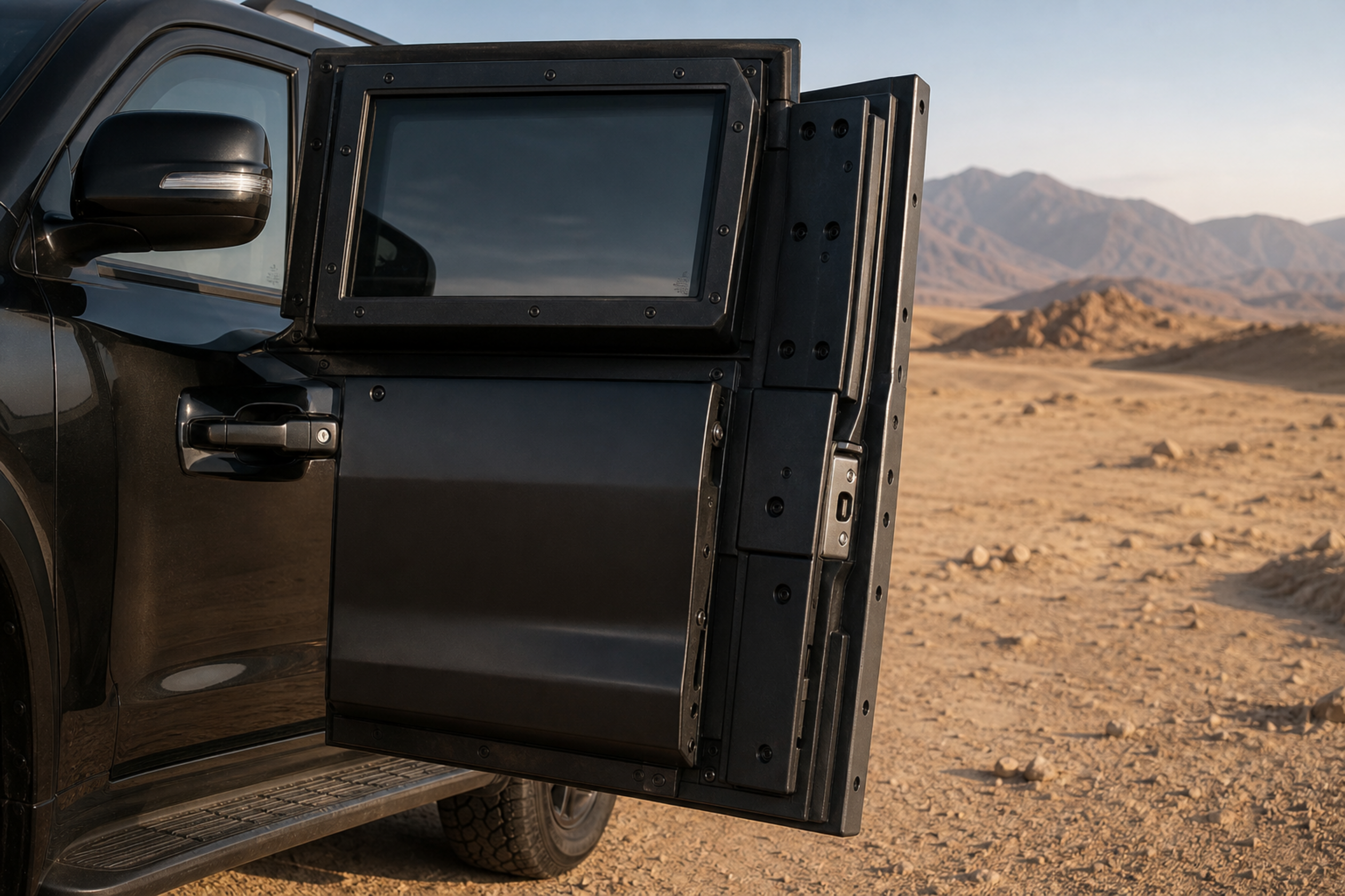
Buyers often ask for the highest armour rating before defining their actual risk. That approach can create unnecessary weight, cost, and operational compromises. The better question is what bulletproof protection level do i need for my route, passengers, and threat exposure.
Protection should match a documented threat assessment, not a vehicle image. Private security teams must consider travel patterns, stopping points, passenger profiles, and evacuation options. A properly specified vehicle protects occupants while remaining practical for daily use.
What Bulletproof Protection Level Do I Need
A protection level should reflect the weapons, attack methods, and locations a passenger may face. It should also reflect whether travel occurs alone or with an escort. Security managers should document assumptions before selecting armour materials.
Market research shows broad demand across several end-user groups. One report valued the global bulletproof vehicle market at approximately USD 4.75 billion in 2024. However, global market size does not determine an individual protection requirement in Pakistan.
Define The Credible Weapon Threat
A credible threat is based on available intelligence and route-specific security conditions. It is not based on rumours or generic social media claims. Your protection provider should record the assumed ammunition and attack direction.
Higher protection can address more severe threats. However, it also adds mass and affects vehicle handling. The selected package must therefore match the operational requirement.
Consider Exposure During Every Journey
Risk changes between home departures, highways, congested streets, and destination arrivals. A predictable route can require different planning than varied daily travel. Security teams should review where vehicles slow, stop, or queue.
Passenger numbers also matter when selecting a platform. An armoured Toyota Land Cruiser can suit protected passenger movement where cabin space is important. A Hilux Revo may better support security personnel and equipment.
>>Related Post: Bullet Proof Vehicles For Real Threats
Route and Passenger Exposure
Protection level selection involves more than ballistic panels and glass thickness. The vehicle must help occupants leave danger after an incident. Therefore, mobility features deserve the same attention as armour coverage.
A security plan should define who travels, where they travel, and how long journeys take. It should also identify safe destinations and support arrangements. These details help avoid specifying a package that exceeds operational needs.
- Identify regular routes, recurring stops, and locations with limited escape options.
- Record passenger occupancy, security escort requirements, and essential carried equipment.
- Define the expected response after a tyre strike, mechanical problem, or blocked route.
Match Mobility Systems To The Escape Plan
Run flat system options can support continued vehicle movement after tyre damage. They do not replace defensive driving, route planning, or trained security personnel. Their value depends on having a realistic escape route.
Armour increases vehicle weight and can affect braking, suspension, and acceleration. The brake system for armoured vehicles requires consideration during every conversion. Suspension for bulletproof vehicles also needs appropriate engineering attention.
Choose a Platform That Fits the Operation
A Land Cruiser Prado can offer enclosed passenger transport for executive protection tasks. A Fortuner can also suit teams needing an SUV-based security platform. Platform selection should occur alongside the protection assessment.
For tactical carrying needs, armoured pickup trucks may offer useful cargo capacity. A Land Cruiser 79 may suit specific operational requirements. Each vehicle needs an individual review of payload, usage, and protection scope.
>> Discuss your route, passenger profile, and protection priorities with our technical team.
Standards To Clarify What Bulletproof Protection Level You Need
A stated protection level has limited value without a defined test standard. Buyers should ask which standard governs glass, opaque armour, and complete system verification. They should also ask what test conditions the stated level represents.
EN 1063 addresses bullet-resistant glazing classifications. EN 1522 addresses bullet resistance for materials and products, including doors and windows. UL 752 is another ballistic-resistance standard used for protective materials.
Separate Glass Performance From Opaque Armour
Bulletproof glass and opaque armour are different components with different construction requirements. A vehicle needs continuous coverage across seams, pillars, doors, and other vulnerable areas. Buyers should ask how the package manages overlaps and joints.
Ballistic testing should be discussed before purchase decisions are finalised. Ask whether testing applies to individual materials or a completed vehicle configuration. The answer helps clarify what the claimed protection level actually covers.
Do Not Confuse Vehicle Ratings With Body Armour Ratings
NIJ Level IV applies to personal body armour, not vehicle armour. It may be relevant when discussing protective vests for occupants or security personnel. It should never be presented as a vehicle ballistic rating.
STANAG 4569 is relevant when military-style threat classifications are under consideration. Civilian executive protection requirements may differ from military operational requirements. The requested standard should always follow the threat assessment.
>>Related Post: B6 Vs B7 Armouring
Vehicle Engineering Changes The Bulletproof Protection Level You Need
The same intended protection scope can create different results on different platforms. Vehicle architecture, payload, and mechanical condition influence the final conversion. Consequently, armour selection cannot be separated from engineering review.
A second market report valued the global bulletproof car market at USD 5.64 billion in 2025. That report includes several vehicle types and end-user applications. It should not be treated as evidence for any specific vehicle specification.
- Ask how added armour weight affects suspension, braking, and vehicle balance.
- Confirm the scope of glass, floor, roof, firewall, and door protection.
- Review run-flat capability, access points, and post-conversion maintenance requirements.
Weight Affects Protection and Daily Usability
Armoured vehicle performance and weight should be considered before choosing a high protection scope. Added mass can change steering response, braking distance, and available payload. The conversion must preserve dependable operation within intended use.
A bulletproof Hilux may suit a team requiring equipment capacity and practical access. An armoured Toyota Hilux Revo needs an engineering review for its intended loads. A passenger-focused SUV may require a different balance.
Coverage Must Support Realistic Attack Scenarios
Protection should be assessed as a system rather than a list of separate materials. Door seams, glazing joins, and passenger compartments require careful attention. Ballistic parts in armoured vehicles must work together as part of the conversion.
Buyers should also examine access and emergency egress requirements. Heavy glass can affect window operation and visibility. These trade-offs should be explained before a protection level is approved.
>> Request a technical assessment before selecting armour for executive or security transport.
Why AAT ArmourTech Gets What Bulletproof Protection Level Do I Need for Travel in Pakistan Right
Protection decisions require clear threat assumptions, defined standards, and vehicle-specific engineering review. AAT ArmourTech can discuss the operational factors behind a suitable armoured vehicle specification. Buyers can also review the company background through AAT ArmourTech. The final specification should be confirmed against the intended threat and vehicle use.
>> Request a protection-level discussion for your intended vehicle and operating route.
FAQs
1. What bulletproof protection level do I need for executive travel?
The appropriate level depends on credible threats, travel routes, passenger exposure, and available security support. A documented threat assessment should guide the final specification.
2. Is the highest protection level always the best choice?
No. Higher protection can add weight and affect handling, braking, payload, and maintenance needs. The best choice is the level that addresses the assessed risk.
3. What standards should a buyer ask about?
Ask which standards apply to the proposed components and verification. Relevant standards may include EN 1063, EN 1522, UL 752, and STANAG 4569.
4. Does NIJ Level IV rate bulletproof vehicles?
No. NIJ Level IV is a personal body armour rating. It may apply to occupant protective vests, but not to vehicle ballistic protection.
5. Why does bulletproof glass need separate discussion?
Bulletproof glass is a distinct component within an armoured vehicle system. Buyers should confirm its stated standard, coverage, visibility, and integration with surrounding armour.
6. Can a bulletproof Hilux suit a private security team?
A bulletproof Hilux may suit teams requiring practical access and equipment capacity. Its final suitability depends on passenger numbers, payload, routes, and required protection scope.
7. Are run flat tyres part of a protection level?
Run flat tyres support mobility after tyre damage. They are separate from ballistic resistance, but can be important within an escape and continuity plan.
8. Can a bulletproof Prado be used for VIP transport?
A bulletproof Prado can be considered for VIP transport where an SUV platform suits the journey and passenger needs. Protection scope should follow the assessed threat.
9. What should I ask an armoured vehicle supplier?
Ask about protection standards, coverage areas, ballistic testing, vehicle modifications, mobility systems, and after sale service. Request these details in writing.
10. How does vehicle weight affect armoured protection?
Added armour weight can affect suspension, brakes, steering response, acceleration, and payload. The vehicle platform and conversion engineering must be reviewed together.